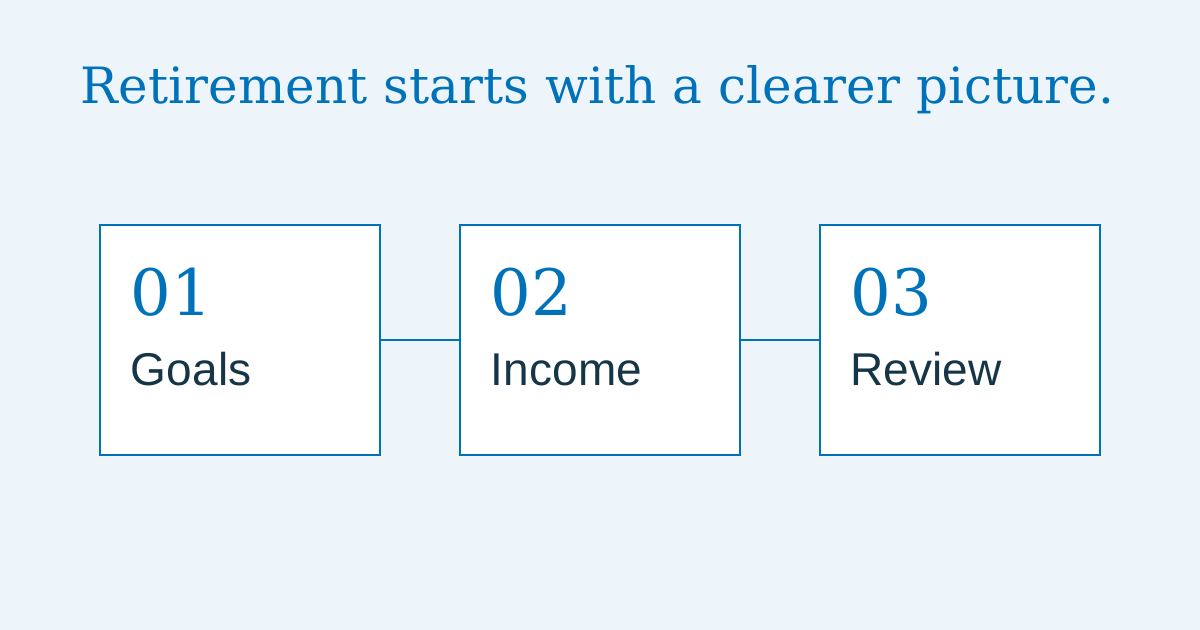
Retirement planning starts with a personal question: what would you like your next chapter to look like? Your account balances matter, but they cannot answer that question on their own. A useful plan connects the life you want with the income, savings, and decisions that may help support it.
This retirement planning checklist is a way to organize a conversation, not a formula for deciding when anyone should stop working. You can use it years before retirement or revisit it when a change in work, family, or health brings new choices into focus. Keep a list of what you know, what you are estimating, and what still needs an answer.
If you want help connecting these pieces, our financial planning services provide a starting point. Before making an investment, tax, benefit, or legal decision, consider how it fits your own circumstances and speak with the appropriate professional.
1. Describe the life you are planning for
Begin with an ordinary week. Where would you live? Would you still work part time? How much time would you spend with family, volunteering, traveling, or caring for someone else? Write down the activities that matter most before you turn them into dollar amounts. This makes the plan about your priorities rather than someone else’s picture of retirement.
If you share finances with a spouse or partner, compare your answers. One person may picture leaving work together while the other wants a gradual transition. One may want to move, while the other values staying near friends. These differences are worth discussing early, when there is still room to make choices without the pressure of an approaching departure date.
Separate firm plans from possibilities. Staying in your current home may be a priority; buying a second home may be an option to explore. Marking that difference helps you see what could change if your finances or preferences shift. A plan should leave space for a life that does not unfold exactly as expected.
2. Build a spending picture you can explain
Use actual bank and credit card records to describe what your household spends now. Group costs into essentials, flexible spending, and irregular expenses. Housing, groceries, and utilities may be recurring needs. Travel and entertainment may be easier to adjust. Home repairs, vehicle replacement, and family support may be less frequent but still deserve a place in the picture.
Then ask what might change when work changes. Some work-related costs may fall, while hobbies, travel, or healthcare spending may increase. Do not assume the changes cancel each other out. Put a note beside each adjustment explaining why you expect it. A modest estimate with a clear reason is easier to review than an exact-looking number with no supporting thought.
Keep current spending separate from your future assumptions. When you revise an estimate later, you should be able to see whether your lifestyle changed, prices changed, or the first estimate was incomplete. Include a way to revisit costs over time rather than treating today’s prices as a permanent budget. For household debt and retirement-income context, the CFPB’s retirement planning guidance explains why those pieces need to be considered together.
- Essential
- Costs your household needs to cover.
- Flexible
- Spending you could adjust if priorities change.
- Irregular
- Expenses that do not arrive every month.
3. Map income sources and their timing
Make an inventory of potential income sources and write down when each may begin. Include Social Security, pensions, part-time work, and withdrawals from savings where relevant. Record what you know about each source, the documents behind it, and what remains uncertain. Do not put every source into one total without considering whether it would actually arrive in the same period.
For Social Security, use your own record rather than a friend’s experience or a broad rule of thumb. The Social Security Administration’s benefits estimate lets eligible users compare estimates tied to their earnings and application timing. An estimate is an input to your planning conversation, not a stand-alone answer about when you should claim.
If you have a pension, gather the plan’s actual election materials before comparing payment choices. Ask what happens if one spouse dies, what deadlines apply, and whether a decision can be changed. For any gap between leaving work and starting another income source, identify what might cover the interval. Bring unanswered questions to the plan administrator and your advisor rather than filling them with assumptions.
- Income begins
- Record the expected start date and conditions.
- Spending continues
- List recurring needs and larger planned costs.
- A gap appears
- Identify the question to resolve before acting.
4. Review investments in the context of withdrawals
An investment portfolio built while you were adding money may need a fresh conversation when you expect to take money out. Start with purpose: which resources might support near-term spending, and which are intended for later needs? This is a planning question, not a recommendation to buy or sell a particular holding or follow a fixed allocation.
Discuss both your comfort with changing account values and your ability to absorb a loss without disrupting essential spending. Those are different questions. Someone may feel calm about markets yet have little flexibility in their budget. Someone else may have financial flexibility but find a volatile portfolio hard to stick with. Your plan should recognize both realities.
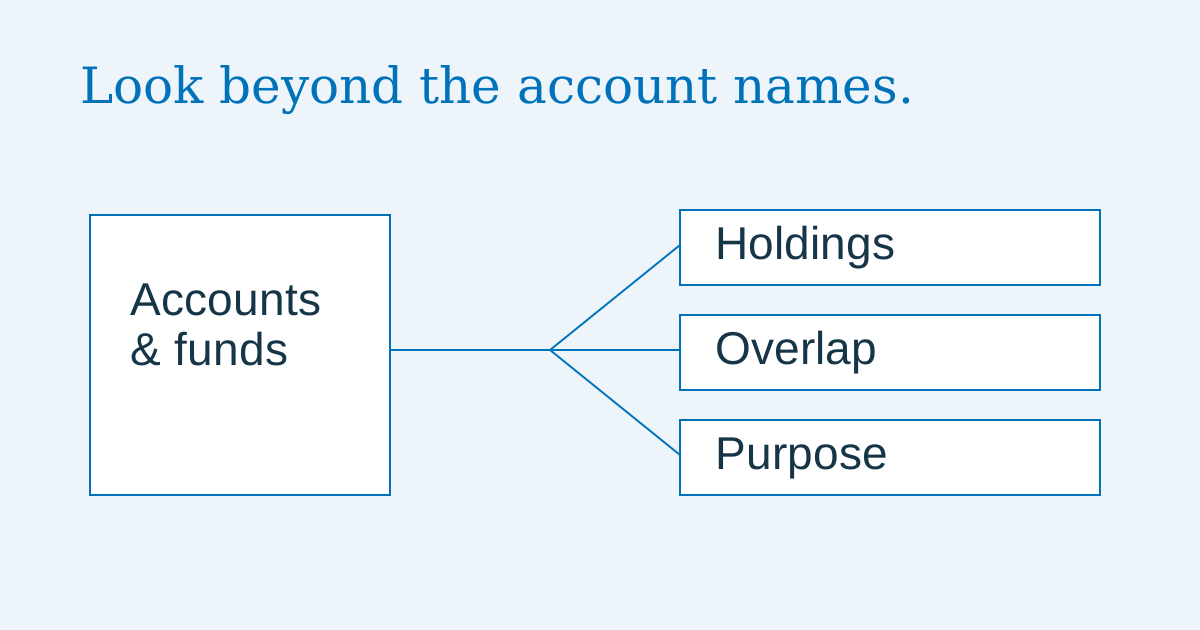
Bring statements for all relevant accounts, including accounts held elsewhere. Our investment diversification review guide explains how to look beyond account names to the risks underneath them. Avoid making changes based only on a recent market move. First understand the decision, its possible costs, and how it fits the larger plan.
5. Make healthcare a separate planning conversation
Find out what happens to your current coverage if you stop working or reduce your hours. Ask your employer or benefits administrator for written information about eligibility, end dates, and any continuation options. If a spouse or dependent uses your coverage, include their situation too. A family’s coverage needs may not change on a single shared date.
Use Medicare’s official getting-started guidance to explore eligibility and enrollment questions rather than assuming enrollment will happen automatically in every situation. Confirm your own timing with the relevant agency or benefits specialist. A general article cannot resolve how your employment coverage and personal circumstances interact.
List premiums, possible out-of-pocket expenses, prescriptions, and questions about longer-term support as separate items to investigate. Keep the amounts you have verified apart from amounts that remain estimates. The point is not to predict every health event. It is to avoid reaching your retirement date with an important coverage question still hidden inside a broad spending estimate.
6. Organize taxes, beneficiaries, and important records
Create a list of account types, ownership, beneficiary designations, and the professionals who help you. Retirement planning often brings investment, tax, and estate questions into the same conversation. That does not mean one professional should answer every question. It means the people involved need enough context to help you understand how one decision may affect another.
Ask your tax professional to review proposed withdrawals or other significant transactions before you act. Do not assume two accounts with similar balances can be used in exactly the same way. The tax treatment of a decision can depend on the account, your circumstances, and applicable rules. Keep the conversation specific rather than relying on a broad online example.
Check whether important contact details and beneficiary records still reflect your wishes, especially after a family change. Review legal documents with your attorney, not by rewriting them from a checklist. Keep a secure record of where documents can be found and who should be contacted if you cannot manage a task yourself. Never place passwords or account numbers in a public inquiry form.
7. Test the plan against more than one future
Ask what would happen if a few important assumptions were less favorable than expected. What if you leave work earlier? What if a large repair arrives in the same year that markets fall? What if support for a family member lasts longer? These questions are not predictions. They help reveal which decisions deserve more preparation and which parts of the plan have flexibility.
For each situation, identify a response you would consider discussing. That might mean revisiting discretionary spending, a work timetable, or a planned purchase. Do not assume that every problem can be solved by changing investments. Sometimes the more useful conversation concerns timing, priorities, or the amount of uncertainty your household is willing to carry.
Write down when you will review the plan and what would prompt an earlier review. A household change can matter even when markets are quiet. A regular review also gives you a chance to replace estimates with actual experience. Our planning approach emphasizes understanding your circumstances and keeping financial objectives in view as life changes.
- Before retirement
- Identify unanswered decisions and deadlines.
- As work changes
- Confirm income, coverage, and account details.
- As life changes
- Revisit assumptions and discuss adjustments.
8. Bring a focused checklist to your next meeting
Gather recent account statements, a spending summary, benefit estimates, pension documents if relevant, insurance information, and a list of debts. You do not need a perfect binder to have a useful first conversation. If a document is missing, name it and note who can help you obtain it. Avoid postponing the discussion simply because your records are not yet complete.
Prepare three lists: decisions you must make soon, questions you want explained, and goals you do not want the numbers to overshadow. Include your preferred retirement timing and any uncertainty about it. If another person shares the decisions, involve them where appropriate. It is easier to build understanding together than to translate a complex conversation afterward.
Leave with a clear next action, the person responsible, and a realistic timetable. Your next step might be collecting a benefit document rather than making a transaction. A checklist is doing its job when it helps turn a vague concern into a specific conversation that can move forward.
Putting the pieces together with Shrier Associates
Shrier Associates provides financial planning and wealth management with a personal, relationship-focused approach. Our team can help you discuss how your retirement questions connect with your investments and wider financial life. Tax and legal matters should be reviewed with your own qualified professionals.
You can schedule a conversation to talk through your priorities. This checklist is general education, not an individualized recommendation, a promise of retirement readiness, or a guarantee of investment results. A thoughtful next step starts with your own facts.
Frequently Asked Questions
When should I start a retirement planning checklist?
You can start whenever retirement becomes a meaningful goal. Earlier planning gives you time to gather information and discuss options. If retirement is close, begin with decisions that have deadlines, such as employment benefits, rather than trying to solve every long-term question at once.
Does reaching a savings target mean I am ready to retire?
Not on its own. A balance does not show when income begins, what your household needs to spend, or which uncertainties matter most. Retirement readiness is a personal planning question that should consider those pieces together, not a universal account threshold.
Should I change my investments before I retire?
A review may be useful, but a review does not automatically mean a trade. Discuss your time horizons, spending needs, current holdings, costs, and risk before making a change. No single allocation or withdrawal approach is right for every household.
What if I do not have all my documents yet?
Bring the information you have and a short list of what is missing. A first discussion can help identify which records matter most. Use a secure method agreed with your advisor for sensitive information instead of sending account details through an ordinary website inquiry.