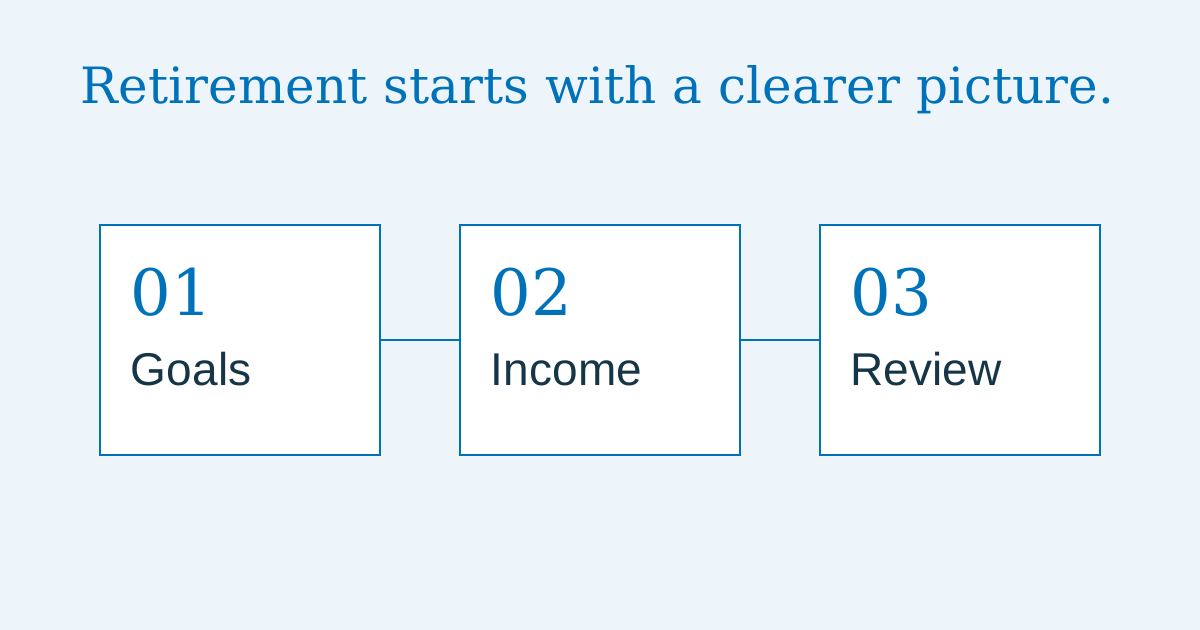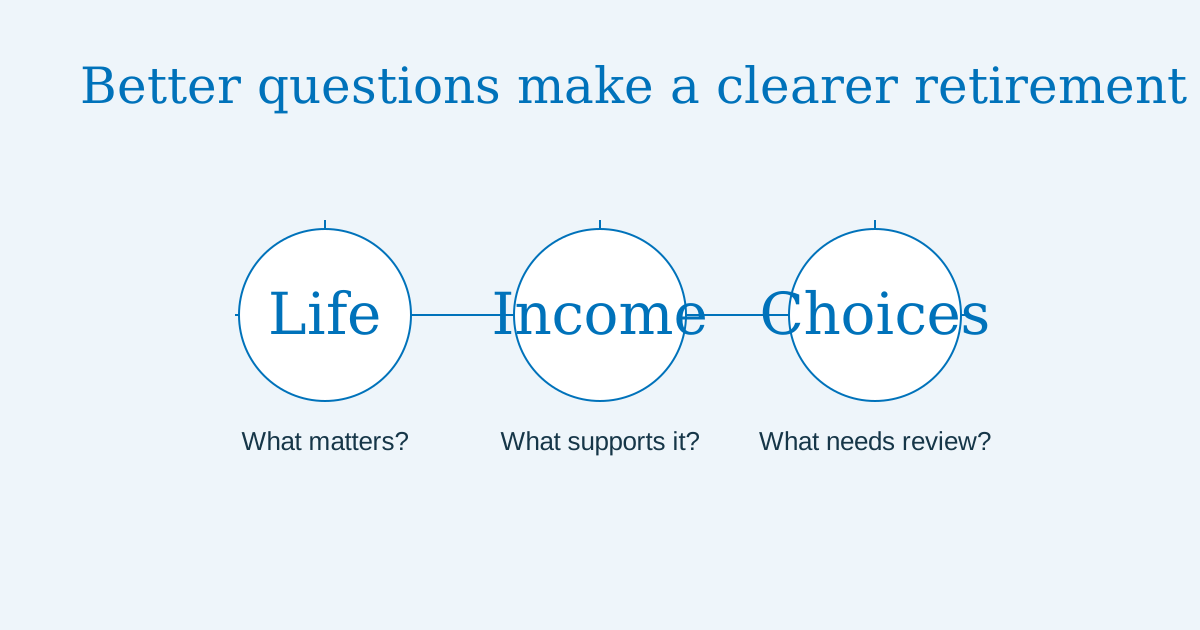
Retirement planning questions are most useful when they turn a broad concern into something you can investigate. “Can I retire?” is important, but it contains many smaller questions about spending, income, health coverage, investments, family, and timing. Working through those questions does not produce a universal answer. It gives you a clearer starting point for decisions that are personal by nature.
Use this guide to prepare for a conversation, whether retirement feels close or is still years away. Write down what you know, the documents that support it, and the questions that remain open. The goal is not to make every decision at once. It is to understand which choices are connected, which ones have deadlines, and where professional guidance may be useful.
For a more detailed way to organize records and actions, see our retirement planning checklist. Shrier Associates can help you connect retirement questions with the rest of your financial life through financial planning and investment management. This article is general education, not individualized investment, tax, or legal advice.
1. What would a satisfying retirement actually look like?
Start with life before starting with a number. Imagine an ordinary Tuesday after work is no longer setting the schedule. Where would you spend your time? Would you stay in the same home, travel more, care for a family member, volunteer, work part time, or pursue something you have deferred? The answers help turn an abstract retirement date into a picture that can be discussed and revised.
If you share the decision with a spouse or partner, compare your answers early. One person may see retirement as a chance to relocate while the other may value staying close to friends or grandchildren. One may want a gradual shift from full-time work while the other expects a clean break. Neither view is wrong, but a plan is easier to test when it reflects the people who will live with it. The Shrier Associates approach begins with these personal circumstances because a financial plan should support a life, not replace it.
- Priorities
- Name the activities, relationships, and routines that matter most.
- Timing
- Distinguish firm plans from possibilities you are still exploring.
- Shared decisions
- Compare expectations with anyone who shares the household plan.
2. What does our household need to spend, and what could change?
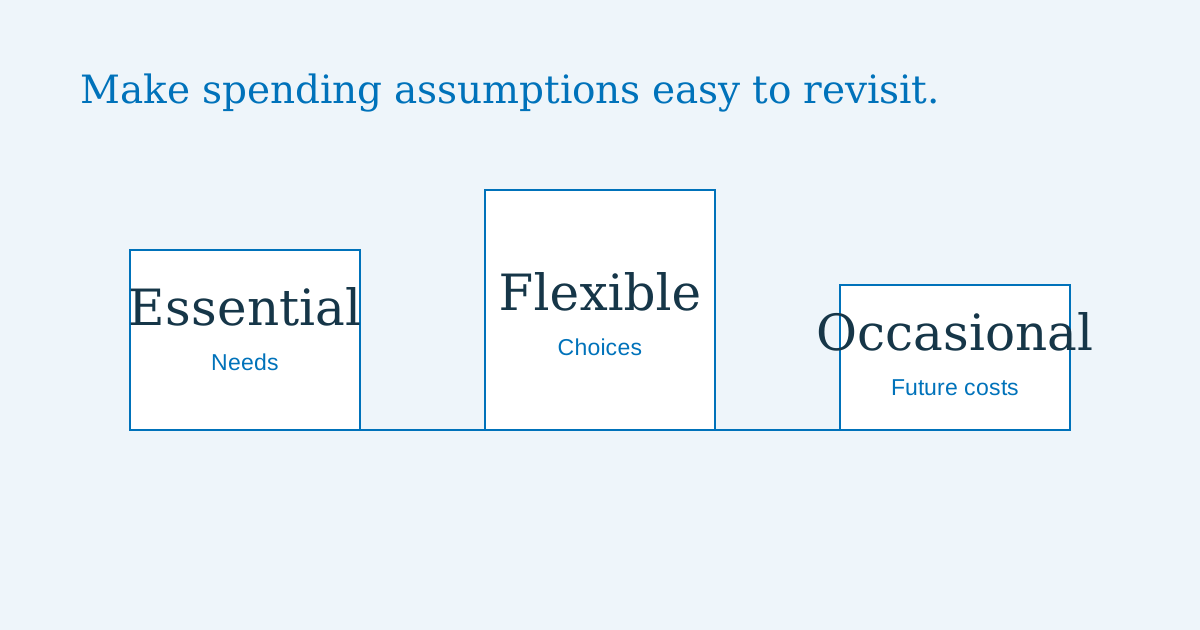
A retirement spending plan is stronger when it begins with actual household records rather than a generic percentage. Review recent bank, card, and recurring-bill activity. Group costs into essential expenses, flexible spending, and expenses that occur only occasionally. Home maintenance, vehicle replacement, travel, family support, and insurance deductibles may not show up in the same month, yet they can still matter to the larger picture.
Then ask what may change as work changes. Commuting or professional costs could fall. Travel, hobbies, healthcare, or home time could rise. Keep verified spending separate from assumptions about the future, and write a short reason beside each assumption. That makes the plan easier to revisit when circumstances change. A reasonable estimate with a clear explanation is more useful than a very precise figure whose source is unclear. This is a useful question to bring to your first planning conversation, along with the items you are still estimating.
3. When would each source of income begin, and what could affect it?
List each possible income source separately: earnings from work, Social Security, a pension, withdrawals, or other resources that may apply to your household. For each one, note the expected start date, whether the amount is estimated or confirmed, and any decision that must be made before it starts. Adding the amounts together without considering timing can hide an important gap between leaving work and receiving income.
For Social Security, use your own earnings record rather than a rule of thumb or someone else’s experience. The Social Security Administration’s benefits estimate lets eligible people see estimates based on earnings and compare application timing. If a pension is part of the picture, gather the plan’s election materials and ask about survivor options, deadlines, and whether a decision can change. Those details belong in the conversation before a choice becomes permanent.
- Source
- Record what the income is and the document behind it.
- Timing
- Note when it may begin and what could delay it.
- Decision
- Identify the choice or question that needs attention first.
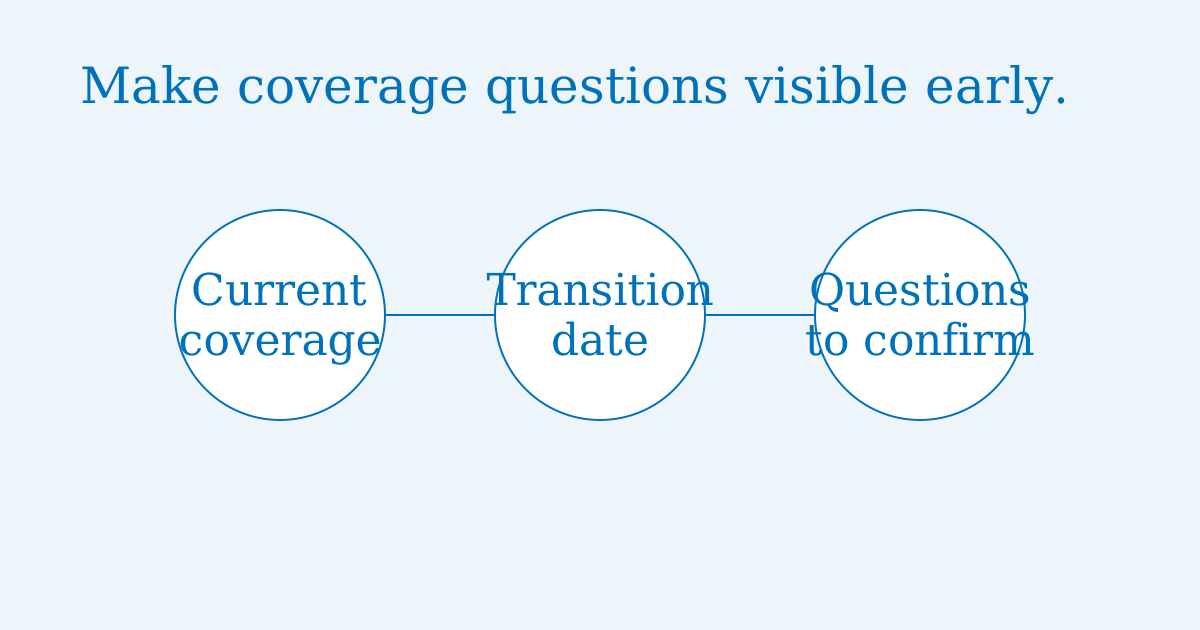
4. How will healthcare coverage fit into the transition?
Healthcare deserves its own question because the answer can depend on employment status, age, family coverage, and the timing of retirement. Ask when current employer coverage ends, who is covered through it, and what information the benefits administrator can provide in writing. A spouse or dependent may have a different timeline, so avoid assuming that a household’s coverage changes on one date.
Medicare has enrollment and coverage questions that should be checked against your own circumstances. Medicare explains that some people with retiree coverage may need both Part A and Part B to receive the full benefits available through that coverage, and drug coverage can have separate considerations. Review Medicare’s retiree insurance guidance, then confirm your situation with the appropriate agency, benefits specialist, or insurance professional. The planning task is not to predict every healthcare cost. It is to make sure an important coverage decision is visible and timed properly.
5. Does the investment plan reflect how and when money may be used?
Retirement can change the questions you ask about investments. A portfolio built while you were adding money may need to be viewed alongside future spending, income sources, time horizons, and the amount of uncertainty your household can reasonably carry. That is not a reason to assume every approaching retirement requires a trade. It is a reason to understand the purpose of the resources you have and the risks involved in relying on them.
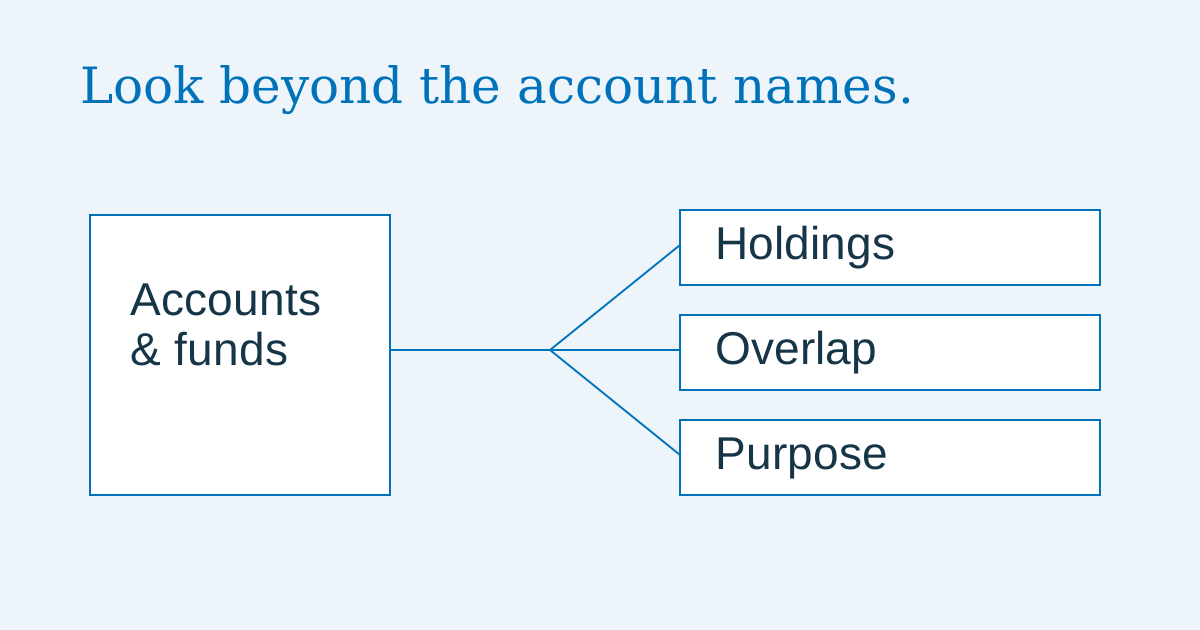
Ask two different questions: what loss could disrupt an important goal, and what level of market change would be difficult for you to live with? The answers are related, but they are not the same. A review should also look across all relevant accounts rather than at a single account in isolation. Our guide to reviewing investment diversification can help you prepare those questions. It explains why account labels alone do not show the exposures and tradeoffs underneath them.
6. What tax, account, and benefit questions need the right specialist?
Retirement decisions can bring taxes, account rules, pension choices, estate documents, and investments into the same period. That does not mean one person should give every answer. It means each professional needs enough context to help you identify where one decision may affect another. Keep a simple inventory of account types, owners, beneficiaries, and the professionals who assist you.
Before a significant withdrawal, rollover, benefit election, or legal change, ask which questions should go to your tax professional, plan administrator, attorney, or advisor. The Internal Revenue Service notes that retirement plans and individual retirement arrangements have their own rules and resources, so a general online example cannot tell you how a specific transaction will apply to you. Use the IRS retirement plan information as a starting reference, then seek advice tailored to the decision. Coordination is often less about finding a single answer than making sure the right questions reach the right person in time.
- Tax professional
- Potential tax treatment of planned withdrawals or transactions.
- Plan administrator
- Benefit elections, deadlines, and plan-specific requirements.
- Attorney or advisor
- Legal documents, planning context, and how decisions connect.
7. What happens if an assumption changes?
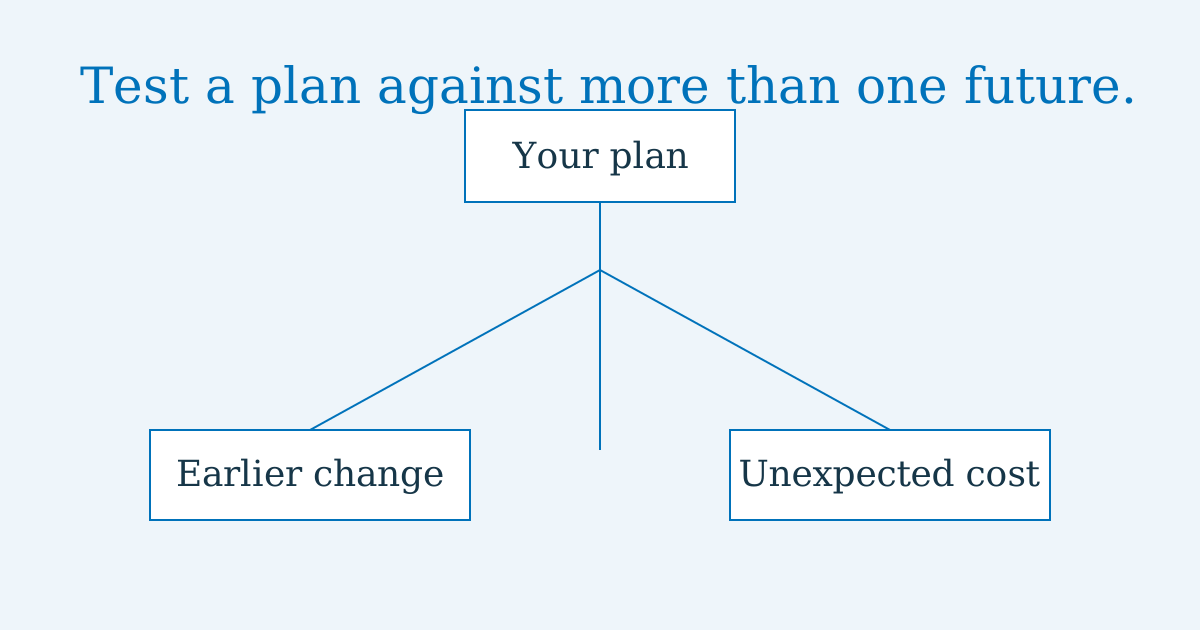
No retirement plan needs to predict the future perfectly. It does need room for a few meaningful changes. Consider how the picture could change if retirement happened earlier than planned, spending rose, a family member needed support, a market decline arrived near a withdrawal, or a move took longer than expected. These are not forecasts. They are a way to find where flexibility matters most.
For each scenario, identify the question you would revisit rather than writing a reflexive solution. You may review the retirement date, a discretionary expense, the size of a planned purchase, or the timing of another income source. Avoid assuming that every uncertainty should be solved by changing investments. A thoughtful plan can also involve timing, priorities, work, insurance, or family decisions. Shrier Associates’ investment philosophy places drawdown risk in the context of a broader plan, because the impact of a decline depends on the life it may affect.
8. What is the next question we need answered?
End with a short, practical list. Gather the documents that support your current understanding: account statements, benefit estimates, pension information if applicable, insurance details, a spending summary, and a list of debts. Then make three columns: decisions with a deadline, questions that need an explanation, and facts that still need to be confirmed. This separates preparation from action and helps a meeting stay focused.
A useful retirement planning conversation should leave you able to name the next step, the person responsible, and the information still needed. That next step might be collecting a benefit document, checking an earnings record, or setting a date to revisit an estimate. It does not have to be a transaction. At Shrier Associates, planning and investment questions are considered together with the circumstances that give them meaning. Bring what you have, identify what is missing, and use the conversation to make the next decision clearer.
Frequently Asked Questions
What are the most important retirement planning questions?
The most useful questions concern the life you want, household spending, the timing of income, healthcare coverage, investment risk, and decisions that require tax, benefit, or legal input. The exact priorities differ by household, so begin by identifying which questions have a deadline or could affect other choices.
When should I start asking retirement planning questions?
You can start whenever retirement becomes a meaningful goal. Beginning earlier gives you more time to gather records and compare options, but a later start can still be valuable when it focuses first on decisions with deadlines. The goal is progress and clarity, not a perfect set of answers on day one.
Should I change investments before retirement?
Not automatically. A review can help you understand how investments relate to spending needs, income sources, time horizons, and your ability to absorb loss. Any investment decision should consider your personal circumstances, costs, taxes, and account restrictions rather than relying on a broad rule.
What should I bring to a retirement planning meeting?
Bring recent account statements, a spending summary, Social Security or pension estimates if available, insurance information, debt details, and a written list of questions. If records are incomplete, note what is missing and who may have it. Use a secure sharing method agreed with your advisor for sensitive information.