Retirement income distribution planning is the process of deciding how the resources you have may support the life you want after regular paychecks change. It is not simply a question of picking one account to withdraw from first. Social Security, pensions, taxable savings, retirement accounts, work income, spending needs, taxes, and investment risk can all affect the conversation.
A useful plan makes those connections visible before an urgent expense or market decline forces a rushed decision. This article offers questions to organize, not a withdrawal formula or an individualized recommendation. Your circumstances, account rules, tax situation, health, family priorities, and tolerance for uncertainty deserve their own careful review.
Start with spending, not an account balance
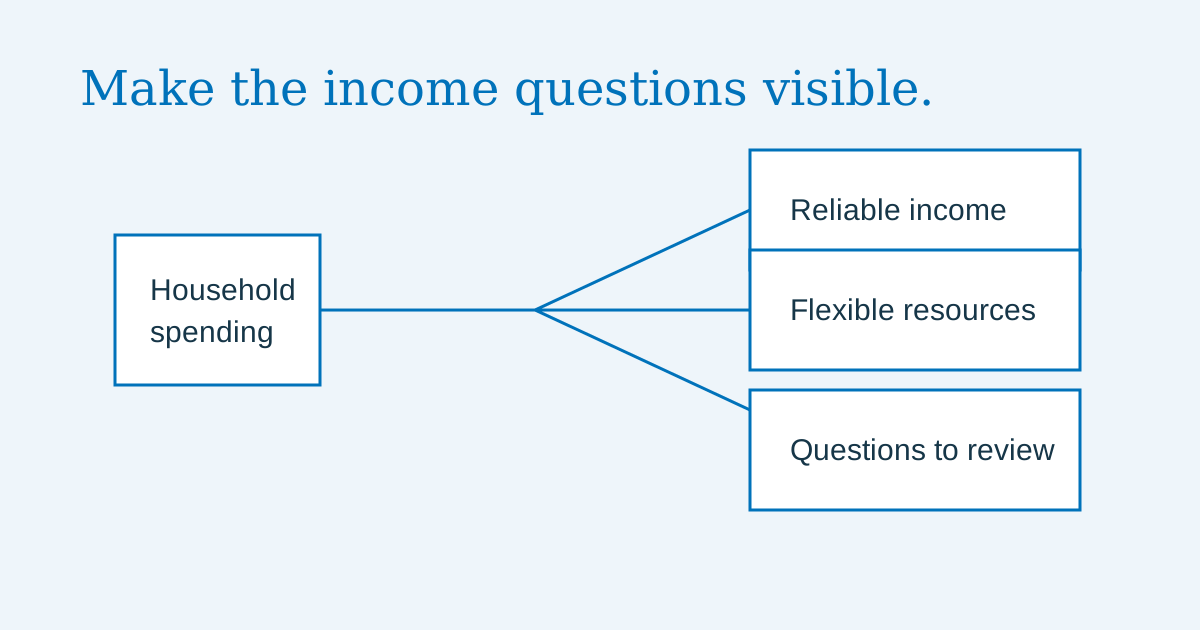
Begin with the household you are planning for. List recurring essential expenses, flexible spending, irregular costs, and goals that matter to you. Housing, food, insurance, travel, family support, gifts, home repairs, and health costs do not all behave the same way. Separating them helps you see what must be funded reliably and what could be adjusted if circumstances change.
Use records rather than relying only on a broad percentage of your current income. A spending estimate should explain what has changed from working years and what may change again later. Keep a note beside major assumptions so you can revisit them. A plan is easier to improve when everyone can see whether a number changed because prices moved, a goal changed, or an earlier estimate missed something.
Consider separating costs that are expected from costs that are merely possible. An annual insurance premium belongs in a working estimate; a future roof replacement may be a question to reserve for or revisit. Both deserve attention, but they should not be treated as equally certain. That distinction makes it easier to discuss which resources are intended for routine income and which are meant to provide flexibility when life does not follow the expected calendar.
Our retirement planning checklist can help organize the wider questions around lifestyle, healthcare, records, and timing. The aim is to understand the spending job your resources may need to do before deciding how any one investment should be used.
- Essential
- Which costs need dependable funding?
- Flexible
- Which costs could change if priorities or markets change?
- Irregular
- Which larger costs deserve a place in the plan now?
Map each income source and when it begins
Create one inventory of potential income sources. Depending on your situation, that may include Social Security, a pension, wages from part-time work, annuity payments, rental income, cash reserves, taxable accounts, traditional retirement accounts, Roth accounts, and other resources. Record what you know about each source, the documents behind it, and the date or condition that starts it.
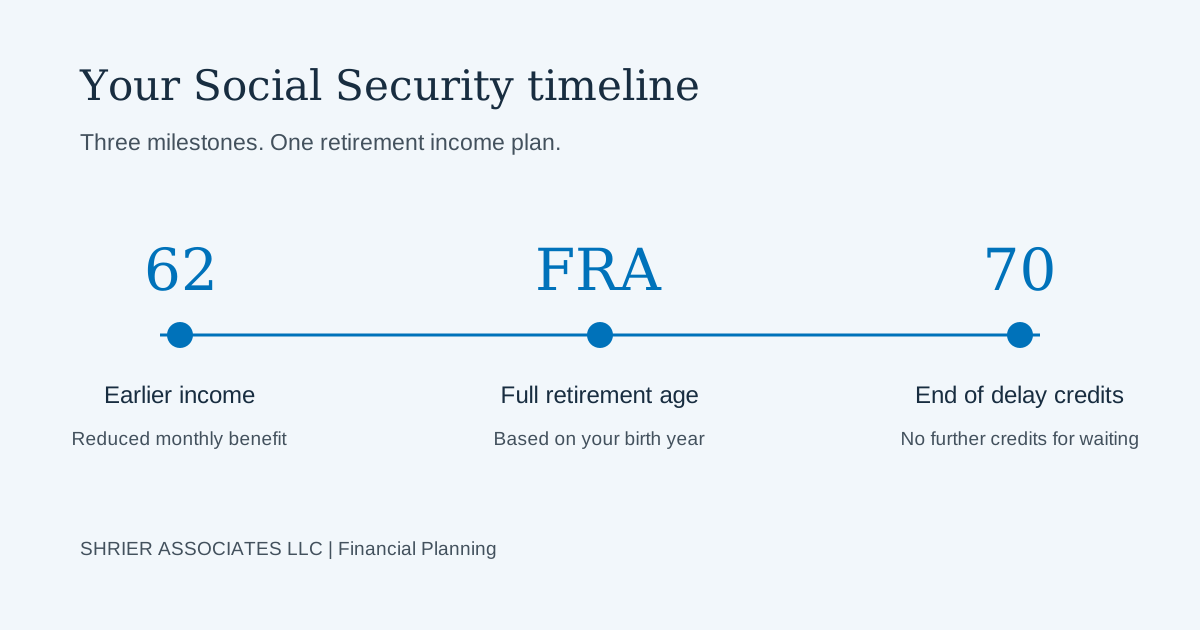
Timing matters as much as the total. An income source that begins later may leave a period that needs to be funded another way. A pension election may involve survivor-income choices. A benefit estimate can depend on work history and a claiming date. Keep each source separate long enough to understand what it contributes, rather than adding every figure into one number that hides differences in flexibility and conditions.
Include details that can change the reliability of a source. Is an amount adjusted over time? Does it continue for a surviving spouse? Is it tied to continued work, a contract, or a plan election? Does it have a start date that can be changed? These are not technical footnotes. They help a household understand which income is dependable, which is discretionary, and which questions should be confirmed before the plan relies on an estimate.
For Social Security, use your own earnings record and estimates. The Social Security Administration benefit estimator is a useful place to compare information tied to your record. It is one input, not a stand-alone answer about when a person should claim.
Understand the gap between reliable income and planned spending
Compare recurring income with the spending you expect to cover. The difference is not automatically a problem, but it is a question to name clearly. A temporary gap might be supported by cash reserves, work income, or an account withdrawal. A long-running gap calls for a more detailed discussion of how much flexibility your household has and which decisions could change if expenses rise or income falls.
Avoid treating every dollar of portfolio value as interchangeable. Money set aside for a near-term purchase, a reserve for unexpected costs, or a later-life goal may play a different role than money intended for ordinary spending. Labeling the purpose and time horizon of each resource can make withdrawal conversations more useful than a single blanket rule.
The retirement planning services page explains how Shrier Associates connects income, investments, taxes, and personal priorities. That broader view is important because a choice that appears efficient inside one account can create a problem somewhere else in the plan.
- Income
- What sources arrive regularly and under what conditions?
- Spending
- What needs to be covered now and later?
- Difference
- What resource, choice, or question addresses the gap?
Keep taxes and account rules in the conversation
The order and amount of withdrawals can affect a tax return, but there is no universal sequence that fits every household. Traditional retirement accounts, Roth accounts, taxable accounts, pensions, and Social Security can be treated differently under tax rules. Account ownership, age, required distributions, capital gains, deductions, and state rules may also matter.
Before acting on a withdrawal idea, ask your tax professional to review the actual return and the year ahead. The IRS explains that required minimum distribution rules apply to many retirement accounts and can change the choices available. A general article cannot determine your distribution amount or tax result.
Bring a complete picture to that discussion. A proposed distribution may interact with wages, investment income, charitable giving, deductions, benefit taxation, and other household decisions. The right professional can help explain the current rules, but the planning conversation should also ask what the transaction means for the resources left available for later goals. Tax awareness is valuable when it supports the larger plan, not when it distracts from it.
It is equally important not to chase a tax result while overlooking cash flow, investment risk, or family goals. A lower tax bill in one year may not answer whether a decision supports the plan you are trying to maintain over time.
Review investments in the context of withdrawals
Retirement distributions change the practical question around investment risk. When money is being withdrawn, a decline in account value can have a different effect than it did while you were regularly adding savings. That does not mean a retiree should make an automatic shift to one type of investment. It means the plan should consider when resources may be needed, how much spending is flexible, and how a household would respond if markets are unsettled.
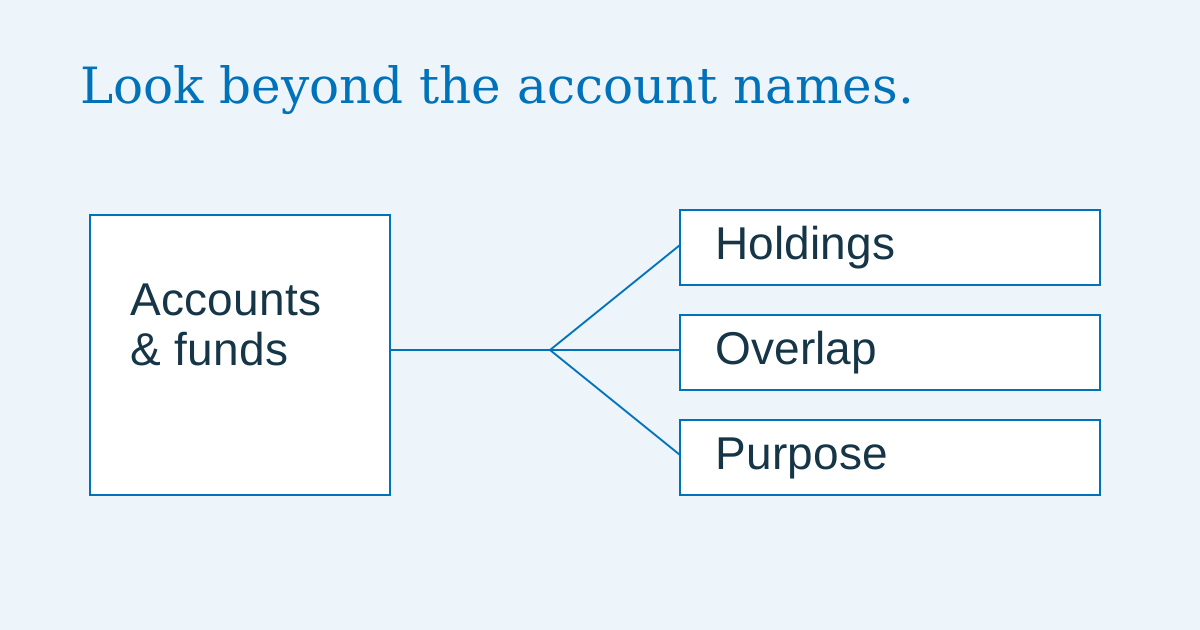
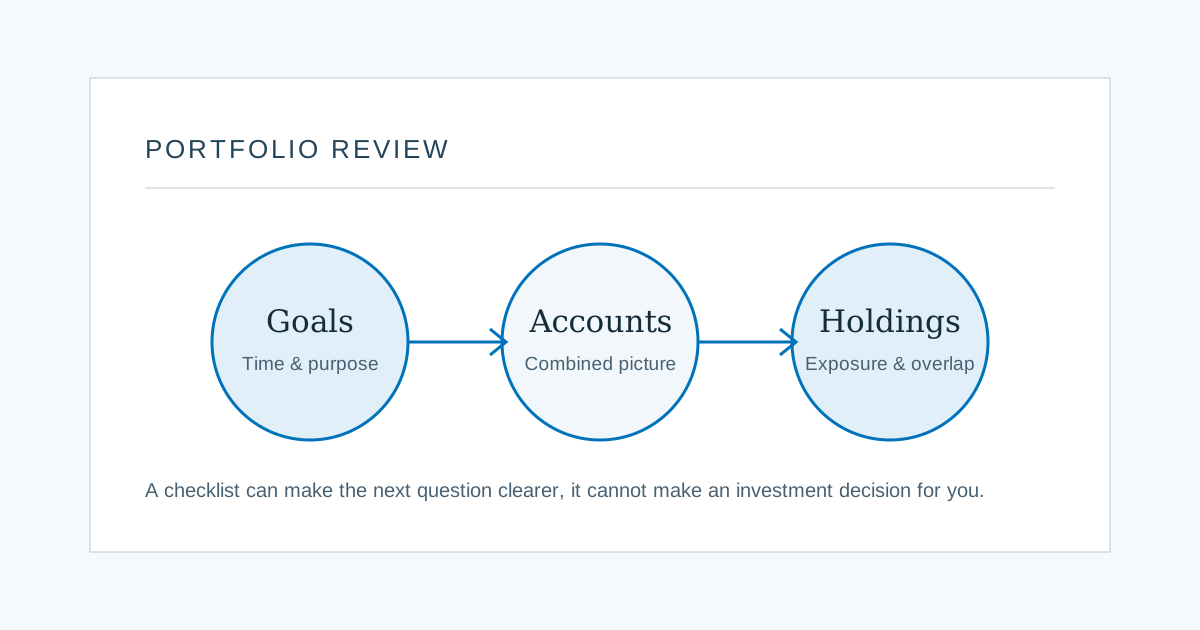
Look through your holdings across accounts before judging whether they fit the role you need them to play. Similar funds can overlap, and different account labels can hide shared exposures. Our investment diversification review guide explains how to prepare for that conversation without turning it into a trading checklist.
Ask both whether you can financially absorb a loss and whether you could stay with a plan during a difficult period. Those are related but distinct questions. A distribution plan should be understandable enough to revisit calmly when the headlines are not.
- Timing
- When might this resource be needed?
- Flexibility
- What spending could change if conditions change?
- Risk
- What market decline could the household realistically absorb?
Plan for surprises without pretending to predict them
A distribution plan does not need to predict every future event to be useful. Test a few situations that would matter to your household: an earlier-than-expected work exit, a major repair, a period of higher healthcare costs, a market decline, or a change in family support. The goal is to identify decisions that may need attention before they become immediate.
For each situation, write down the first question you would ask. It might concern spending, benefit timing, tax consequences, insurance, or investments. A clear question is more valuable than a false promise that one account or strategy can solve every uncertainty. Keep a regular review date as well as events that should prompt an earlier conversation.
The review can also identify what does not need to change. A calm period is a useful time to confirm account records, update assumptions, and decide who should be contacted if a future question arises. That preparation can reduce the chance that a sudden event turns into an improvised financial decision.
Bring the right information to a planning conversation
Gather recent account statements, benefit estimates, pension election materials if applicable, a spending summary, a recent tax return, and a list of upcoming decisions. Record what is missing rather than delaying the entire process until every document is perfect. A first meeting can help identify which facts matter most and where an outside specialist should be involved.
Shrier Associates can help connect retirement-income questions with investment management and wider financial planning. The conversation remains personal: tax matters should be reviewed with a qualified tax professional, legal matters with an attorney, and benefit eligibility with the appropriate agency or plan administrator. You can contact our team to begin a discussion about the decisions and questions in front of you.
A productive conversation does not require immediate answers to every question. It should leave you with a clearer picture of the next decision, the information needed to evaluate it, and the professionals who can help address its tax, legal, benefit, or investment implications.
This article is general education only, not individualized investment, tax, legal, or retirement-income advice. It does not promise a particular withdrawal result or investment outcome.
Frequently Asked Questions
What is retirement income distribution planning?
It is the process of organizing how income sources and savings may support spending after regular work income changes. It considers timing, taxes, account rules, investment risk, benefits, and personal priorities rather than relying on one withdrawal rule.
Should I withdraw from a specific account first in retirement?
There is no universal order that fits every household. Different account types, taxes, required distributions, spending needs, and goals can change the analysis. Review your circumstances with your advisor and tax professional before making a distribution decision.
How often should a retirement income plan be reviewed?
A regular review can help replace assumptions with current information. It is also sensible to revisit the plan after a major change in work, health, family, spending, benefit eligibility, or investments.
Can this plan protect me from market losses?
No plan can remove market risk or guarantee results. A useful review can help you understand how spending needs, time horizons, portfolio risk, and flexibility connect so you can discuss a response before a difficult period arrives.